About Us
The Technical Telematics Engineer
Why this profile is worth its weight, told the long way round.
Open Source by conviction, 22 years working with companies, and a relationship with computers that goes back to a green-phosphor screen in the mid-eighties.
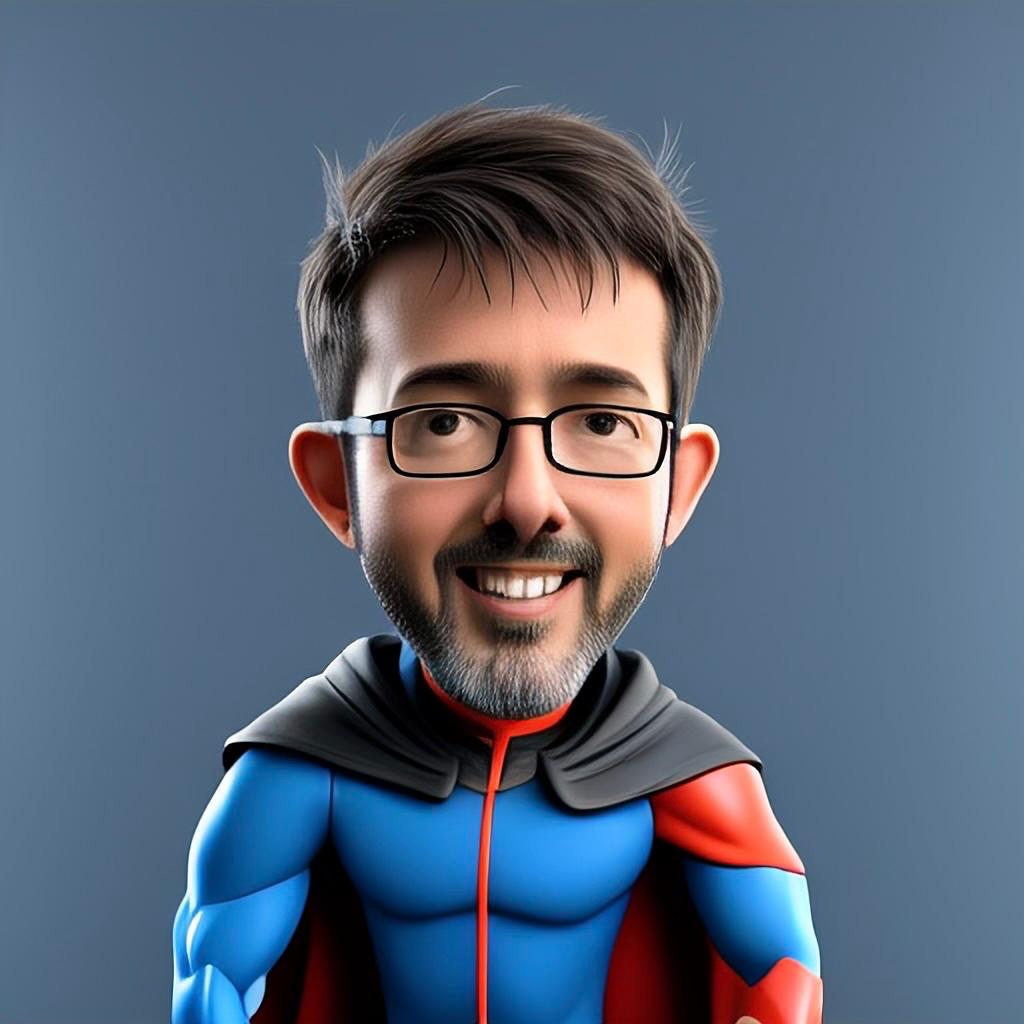
(how do you feel using agentic AI)
Fernando Hernández Conesa
Technical Engineer in Telematics
Senior Odoo Consultant
Founder of Lemon Tree Cloud
Professional profile
Technical Engineer in Telecommunications with a Telematics specialization, graduated in 2004 from the Escuela Universitaria Politécnica de Linares (Jaén). Twenty-two years in the trenches: ERP, server infrastructure, IoT, AI, programming and all the unglamorous plumbing between systems that companies actually need to keep the lights on.
These days I run Lemon Tree Cloud, a small consultancy for Spanish SMEs built around Open Source. The pitch is short: give companies access to serious technology without the licence-fee tax, and treat them like adults who can handle an honest conversation about trade-offs.
Specialties
- Odoo ERP (Community + OCA)
- Proxmox / Docker / LXC
- Python, SQL, Bash, C#, PHP
- Claude AI + automation
- IoT (Arduino, MQTT, PLC, ESP8266)
- Networks, VoIP and telecommunications
Certifications
- Technical Engineer in Telecommunications, Telematics specialization (2004)
- C Programmer, ECC Murcia (1998, 2-year course)
- Odoo Base Technic (AE Odoo, 2021)
- Agile Management and Scrum (2019)
Languages
- Spanish (native), English (B2)
Block 1
A career told through computers
Every engineer carries the shape of the machines that went through their hands. Here are mine, in roughly chronological order.
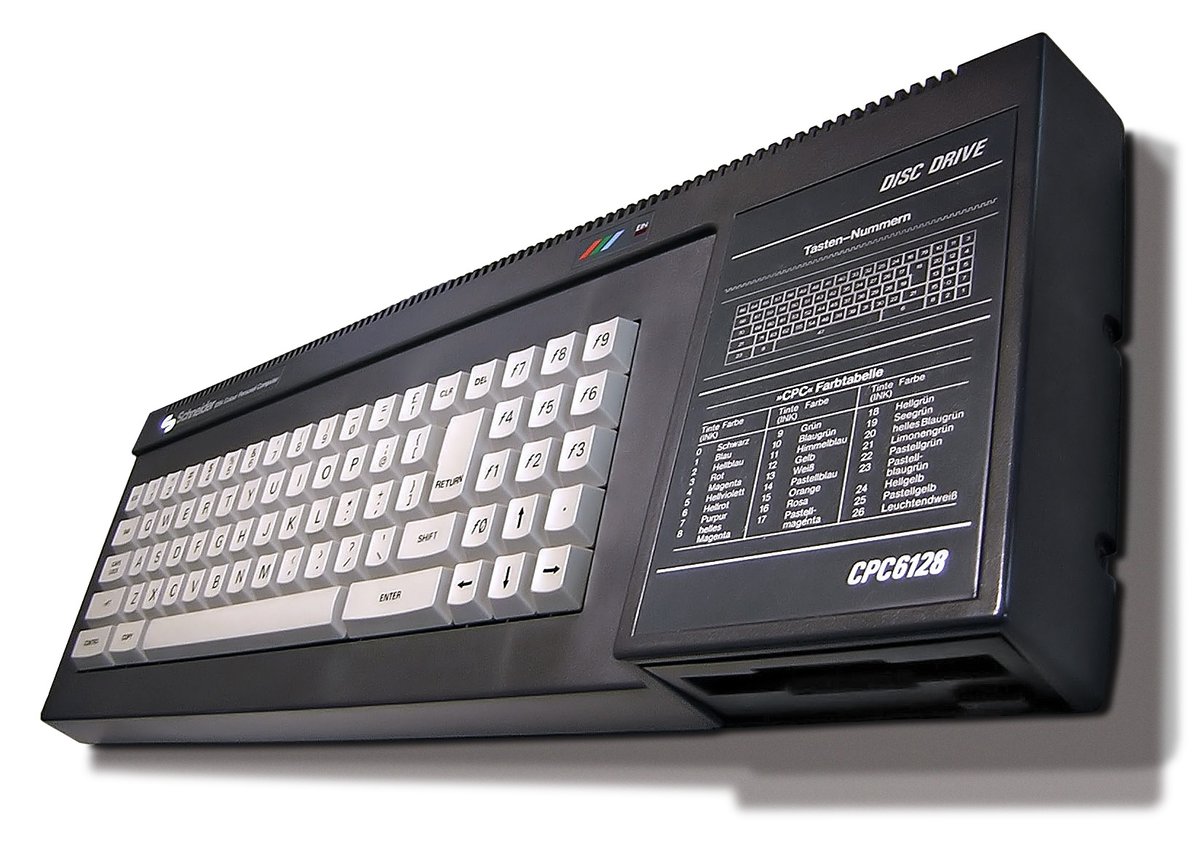
Amstrad CPC 6128 — mid 1980s
Green phosphor screen, games, and my first BASIC lessons typed in line by line from the listings in computing magazines. First taste of CP/M. The user manual was the size of a brick and I read it cover to cover, which taught me something that I keep returning to: computers come with documentation, and the documentation is meant to be read.
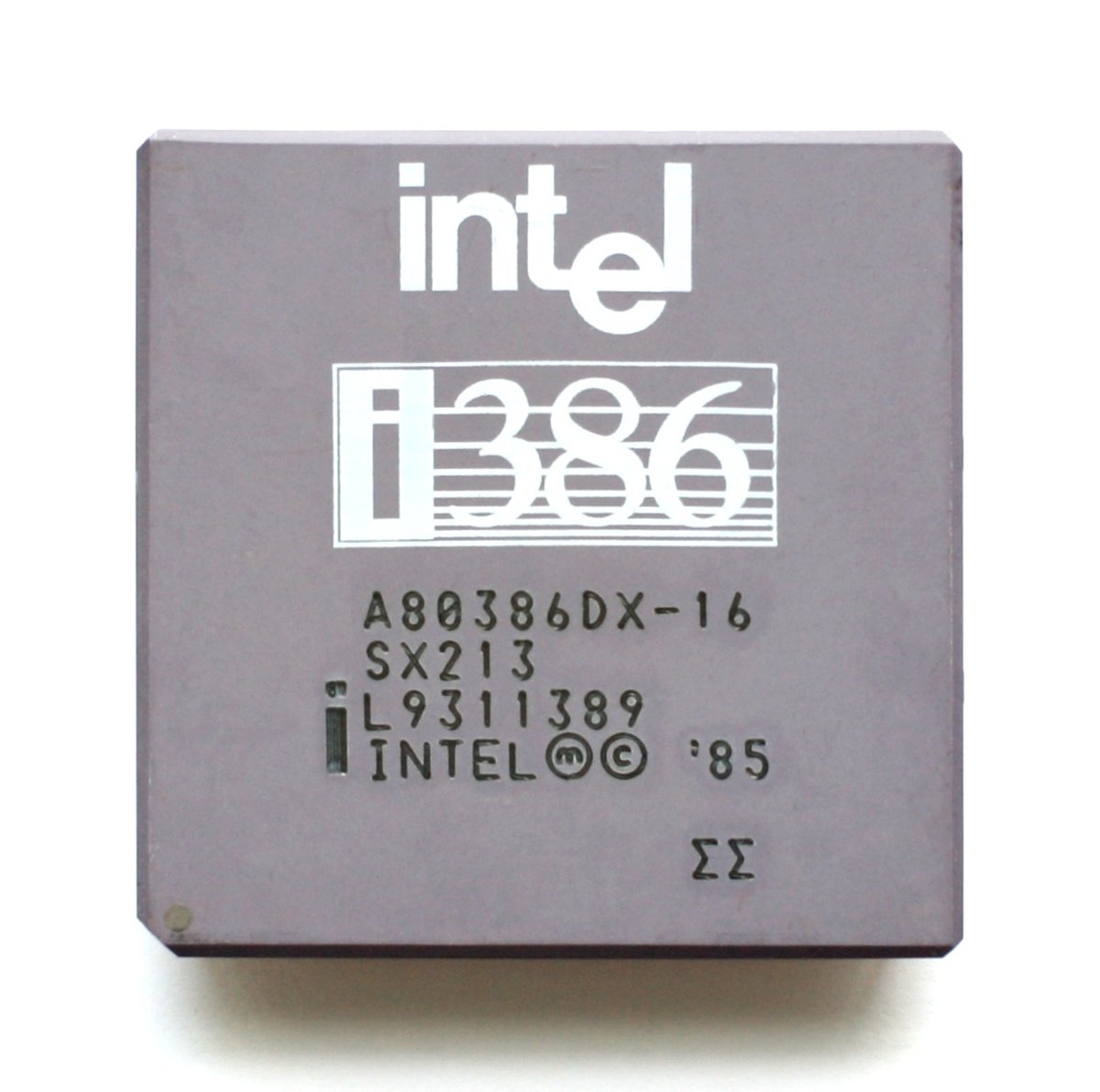
AMD 386 33 MHz — 1 MB RAM, 50 MB HDD — early 1990s
MS-DOS 5.1, Windows 3.1. Day two with the brand-new machine: it would not boot. Lost MBR. My family called a technician who turned up with his MS-DOS floppies, typed sys c: /mbr, and charged 5000 pesetas for the privilege. That was the first and last time I ever called a technician. From that day on, I stopped asking for help and started reading manuals.
The chip in the photo is an Intel 386DX. The kind of silicon that taught a whole generation that "boot" was a verb, and that recovering from a corrupted MBR was a rite of passage.
On this same PC I installed Linux for the first time. Slackware, off a CD-ROM stuck to the cover of one of those thick computing magazines that used to live on the kitchen table. Then came the modem — 2400 baud, later 14400 — and the BBSes, and FidoNet packet mail downloaded with Blue Wave: you would dump your network mail to a floppy, walk it to another computer, and read it offline. Asynchronous communication, before it was a buzzword.
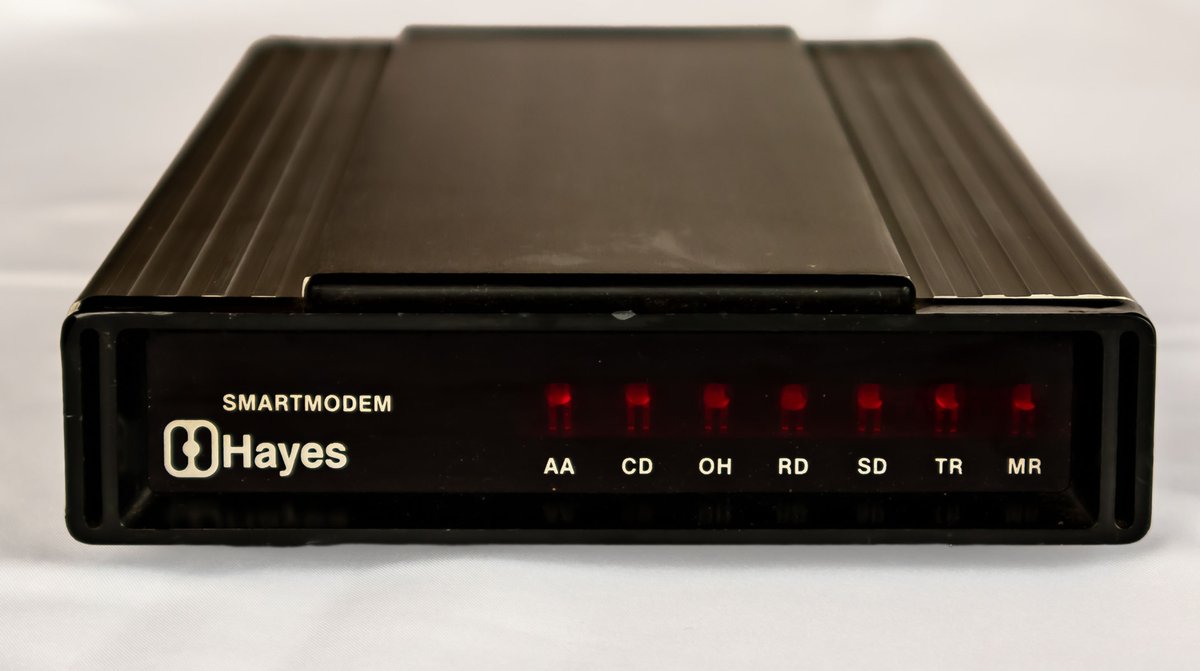
Hayes Smartmodem — the LED bar that lit up while you were waiting to see what 14400 baud felt like.
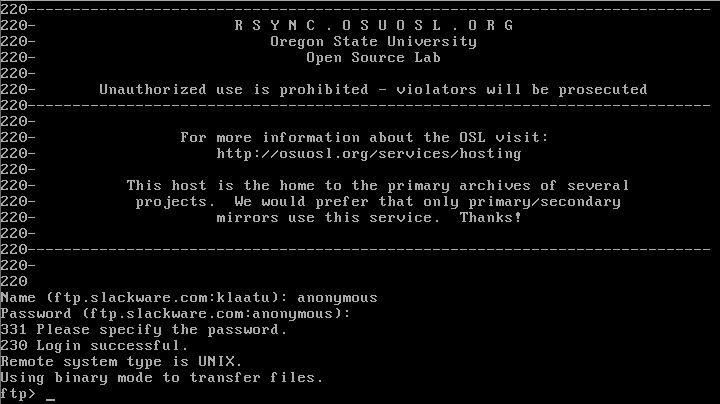
The kind of terminal that ate a Saturday afternoon and gave you back a working Linux.
AMD 486 DX4 100 MHz — 8 MB RAM, 1 GB HDD — mid 1990s
The polyglot machine: MS-DOS 6.x, DR-DOS, OS/2 Warp Connect, Red Hat, Debian, Knoppix, Windows 95. Two years of C programming at ECC Murcia (Analyst-Programmer course, 1996-1998), followed by university. The 486 was my development workstation, my Linux lab and my BBS terminal at the same time, and it taught me that an operating system is a choice, not a destiny.
The Pentium and Athlon years — late 1990s to mid 2000s
Intel MMX 200 MHz / 16 MB RAM, Windows 98 then XP. AMD Duron 600 / 128 MB. The first laptop, a Fujitsu Siemens Mobile 1.4 GHz, dual-booting XP and Ubuntu 7.04. Then an Acer 17" with XP, Ubuntu 8.04, and a Hackintosh build because someone had to try it. A Core 2 Duo running the same triple-OS routine. By the end of the decade I had stopped counting reinstalls.
2012 — the year Linux became my desktop, for good
An 8-core AMD FX-8350 with Ubuntu 12.04. That box was many things: my first "real" server, my first virtualization lab, and the machine where Linux stopped being my "second OS" and became my primary desktop environment.
Fourteen years later, I am still on Ubuntu as my daily-driver desktop, uninterrupted. Not as a hobby, not as a side project — as the operating system I use to do real work, every day. When a client is migrating to Proxmox, Docker or Odoo, I am not learning the terrain alongside them. I am at home.
Today — 2026
- Laptop: AMD Ryzen 5 3500U with Radeon Vega, 20 GB RAM, 1 TB NVMe, Ubuntu 22.04.
- Server #1: 28× Intel Xeon E5-2697 v3 (2.60 GHz), 64 GB RAM, 4 TB NVMe + 4 TB HDD, Proxmox.
- Server #2: 28× Intel Xeon E5-2680 v4 (2.40 GHz), 32 GB RAM, 2× 512 GB NVMe + 4 TB HDD, Proxmox.
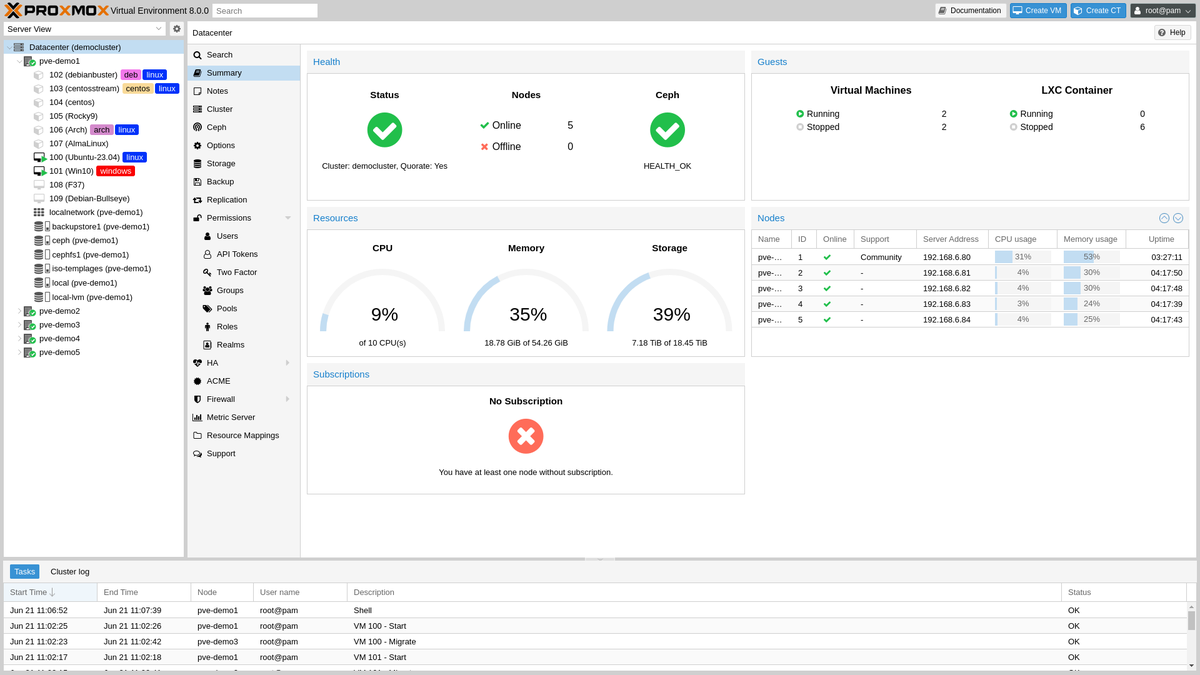
Proxmox VE, where most of what runs today lives.
My first commercial code, still on disk
Mesón Restaurante La Panocha was the family business. Two GWBASIC programs ran the floor: MESON.BAS managed the dish master file, PANOCHA.BAS handled tables, accounts and end-of-day totals. They CHAIN-ed into each other because back then "modularity" meant swapping the running program in and out of 640K of RAM.
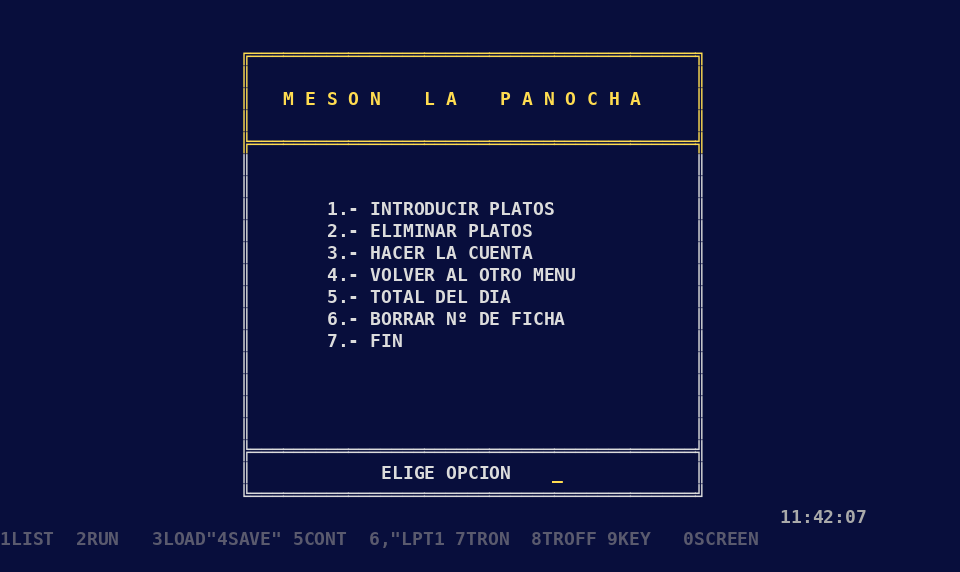
PANOCHA.BAS main menu. Pick an option, get on with the shift.
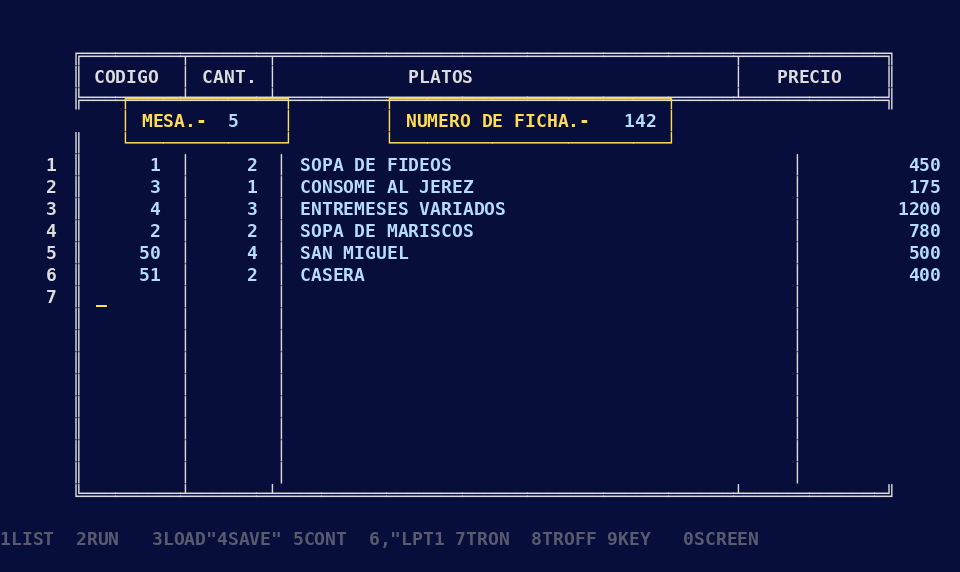
"INTRODUCIR PLATOS" — table 5, six dishes typed in, total in pesetas on the right. The cursor waits for line 7.
1   DIM CODIGO(50,50),CAN(50,50),NF(50)
3   OPEN "PLATOS" AS #1
4   FIELD #1, 40 AS PL$, 11 AS PR$
5   OPEN "NUMERO" AS #2
6   FIELD #2, 5 AS NU$
...
70  LOCATE 9,20:PRINT " 1.- INTRODUCIR PLATOS    "
80  LOCATE 10,20:PRINT " 2.- ELIMINAR PLATOS      "
90  LOCATE 11,20:PRINT " 3.- HACER LA CUENTA      "
100 LOCATE 12,20:PRINT " 4.- VOLVER AL OTRO MENU  "
110 LOCATE 13,20:PRINT " 5.- TOTAL DEL DIA        "
120 LOCATE 14,20:PRINT " 6.- BORRAR Nº DE FICHA   "
130 LOCATE 15,20:PRINT " 7.- FIN                  "
...
1266 FOR NM=1 TO 50
1267  FOR I=1 TO 50
1273   IF CODIGO(NM,I)=0 THEN GOTO 1277
1274   GET #1,CODIGO(NM,I)
1275   TOTAL = VAL(PR$) * CAN(NM,I)
1276   TD = TD + TOTAL
1277  NEXT I,NM
1280 LOCATE 12,15:PRINT "TOTAL DEL DIA ............ "; TD
Random-access fixed-length records (FIELD ... AS PL$, ... AS PR$), a dish master file as a flat binary, two-column receipts on a dot-matrix printer fed with carbon paper, and a daily-total routine that walked all 20 tables of the restaurant. The arrays were dimensioned to 50 because in BASIC you over-allocated and slept better. Today this is a POS module on Odoo with account.move, pos.order and product.template, plus a handful of REST hooks. The abstraction has changed. The actual problem has not.
The source files have travelled with me across machines, file systems and decades, so the disk timestamps are useless. The exact year is gone. The shape of the code — random-access fixed-length records, dot-matrix two-column receipts, CHAIN between programs to swap them in and out of 640K — places it firmly in the early 1990s.
From GWBASIC to a modern point of sale
That cash register never really stopped working — it just changed shape. In the 2000s I migrated the family-business workflow to Openbravo POS (formerly Librepos), the Open Source Java point-of-sale that ran on top of PostgreSQL or MySQL. It taught me what a "real" POS architecture looks like: separated layers for catalog, sales, payments, fiscal printing, and a plugin model that did not insult the developer.
Years later, during the Eurofic period (ICG Partner, 2011-2017), I designed and implemented the business logic of iNative POS — a custom point-of-sale built in .NET on top of SQL Server, plus the Telecomanda module for waiter-side order taking from handhelds to the kitchen printer. Same problem space as PANOCHA.BAS — dishes, tables, prices, daily totals — except now with networked devices, audit logs, fiscal hardware, multi-store reporting and the kind of edge cases that only show up on a Friday night with 40 covers waiting.
Three generations of point of sale, same engineer. The lessons compound.
Block 2
Four milestones that shaped this profile
ICG — the parking socket and the ERP that grew up (2011-2017, Eurofic Software Murcia, ICG Partner)
Six years as an ICG Software Partner: ERP consulting and implementation, integrated point-of-sale systems, prestashop integration, .NET and Python development. The piece I remember best is the custom parking socket integration: low-level protocol work between the ERP and the access-control hardware, the kind of project where you spend three days reading vendor documentation and one afternoon writing the actual code.
Why it matters today: when a Lemon Tree Cloud client needs Odoo talking to a piece of legacy hardware, the workflow is identical. The protocol changes; the discipline does not.
Me Fresh Market — EDI for orders and invoices, and the talking scales (2015-2016, Me Fresh Market Murcia, Freelance, team of 4)
Full ERP migration from ICG (MSSQL) to vBase (Oracle), data transfer, design and implementation of the integration between Dibal (MySQL) and Epelsa (MSSQL) price-computing scales and the new vBase software. EDI in Python for orders and invoices only — not the full EDIFACT messageset, just the two flows the business actually needed. A C# balance-management application on top. Triggers and linked servers between the three database engines.
Why it matters today: integrating an ERP with industrial weighing scales, EDI partners and legacy databases at the same time is exactly what an SME means when it says "we need everything to talk to everything". This is a normal week-three at LTC.
Villaescusa Desarrollo Group — SII design and the first Proxmox (2017-2018, Freelance IT Manager)
IT manager for a multi-company group, supporting 60 users. Virtualization with Proxmox for the first time as a production platform — the direct ancestor of the dual-Xeon Proxmox cluster Lemon Tree Cloud runs today. FreePBX VoIP server. SII (Suministro Inmediato de Información, AEAT) design work bolted onto their existing legacy ERP — no greenfield, no rip-and-replace, just the modelling, mapping and wiring the AEAT actually wanted, on top of what the company was already running. Custom apps for material control with S/N, absence management, integration with AngePlus and Sport MatchPoint, plus ITV, sport and cafeteria connectors for the new GrupoSis ERP.
Why it matters today: SII compliance is non-negotiable for many SMEs, and Proxmox is now the default infrastructure target for almost every LTC deployment. Both started here.
Bionet Engineering — Layer-2 VPNs and Arduino on the production line (2018-2020, IT Department Manager)
Responsible for infrastructure: Cisco/Meraki networks, VoIP, Proxmox, Odoo ERP implementation (with Pesol as partner), Active Directory automation, Web+mail VPS. Layer-2 VPN server implementation for internal processes — bridging Ethernet across WAN, not routing at L3. Java/Tomcat/MySQL/MongoDB stack for Rosita Installer. ScaleGateway: Arduino + RS232 talking to industrial scales and PLCs on the factory floor. Microfiltration control system on Arduino Yun, Lua and Python.
Why it matters today: industrial customers need OT/IT integration that respects both worlds. The Bionet years are why MarIA — our AI voice agent — was never going to be a generic chatbot, and why LTC integration projects start with a network diagram, not a Figma mock.
Full professional timeline
Lemon Tree Cloud
Founder and Senior Consultant
Open Source IT consultancy for SMEs. Odoo, Proxmox, AI integration (MarIA voice agent), IoT, ICT projects under RD 346/2011.
Indaws Business Solutions, S.L.
Odoo Senior Consultant — June 2025 to March 2026 (Valencia, Remote)
Custom developments, migrations, connectors, data import/export, Odoo Studio, deployments on indaws.cloud, Claude skills. Stack: Odoo, Odoo.sh, Git, Docker, Claude.
INCloud Solutions
Odoo Technical Consultant — December 2023 to May 2025 (Murcia, Hybrid)
Custom developments (models, views, wizards, reports). Migration from v14 Enterprise to v15 Community. WSL + Docker development environment.
Pesol (OCA Partner) and SIDOO
Odoo Technical Consultant — January 2023 to December 2023 (Remote)
Custom developments. Deployment from code with Git and submodules. Deploy environments with LXC, Ansible and Docker.
MCR Solutions
Odoo Technical Consultant — March 2021 to August 2022 (Viladecans, Barcelona, Remote)
Odoo custom development. Data extraction from Oracle and MS-SQL Server for SAP migration using KNIME. Monitoring with Zabbix.
Bionet Engineering
IT Department Manager — March 2018 to October 2020 (Fuente Álamo, Murcia)
Cisco/Meraki, VoIP, Proxmox, Odoo (with Pesol as partner). Layer-2 VPN, VPS, Rosita Installer, ScaleGateway (Arduino + RS232 + PLC), Microfiltration control (Arduino Yun, Lua, Python).
Villaescusa Desarrollo Group
Freelance IT Manager — March 2017 to March 2018 (San Javier, Murcia)
Multi-company IT for 60 users. First Proxmox in production, FreePBX VoIP, SII (AEAT) design on top of their existing legacy ERP, custom apps integrated with AngePlus and Sport MatchPoint, connectors for GrupoSis ERP.
Eurofic Software (ICG Partner)
Freelance — November 2011 to May 2015, and November 2016 to February 2017 (Murcia)
ICG Software Partner. ERP consulting and implementation, integrated POS, prestashop integration, parking socket customization, .NET and Python development, iNative POS business logic and Telecomanda module.
Me Fresh Market
Freelance — May 2015 to October 2016 (Murcia, team of 4)
ERP migration ICG (MSSQL) to vBase (Oracle). EDI in Python for orders and invoices only. Integration of Dibal (MySQL) and Epelsa (MSSQL) industrial scales with vBase. Balance management app in C#.
Cesoft Murcia S.L.
Programmer C#, WPF, LinQ, MSSQL — September to November 2011
Point-of-sale application (okipos+), wardrobe module, error correction.
Pinatar Computer S.L.
Technical Manager — September 2004 to September 2011 (Murcia)
First job after graduating. Development and management of ICT projects, software development, network installation, repair and installation of computer equipment, VPS administration, VoIP, general business maintenance.
Block 3
The Technical Telematics Engineer today
Why does this profile matter for a company? Because the wall between "telecoms" and "IT" was always more marketing than reality, and it has gotten thinner every year since.
From BBS to VoIP AI
Asynchronous messaging on dial-up modems in the early nineties is the same problem as a voice agent (MarIA) that talks to clients today: encode, transport, decode, do something useful with the result. The latency budget has shrunk by six orders of magnitude. Everything else is the same conversation.
From GWBASIC to Odoo
The PANOCHA cash register is now an Odoo POS module, an account.move object and a few hundred lines of Python. The structure of a business — dishes, tables, prices, daily totals — does not change. What changes is how much of it you can hand to a framework, and how much you still have to think about.
From Slackware to Proxmox
Installing Linux on a 386 with less than 2 MB of RAM was the same discipline as running an LXC container today: understand what is actually needed, strip everything else, accept that "convenience" usually means "you pay for it later". Hackintosh and the OS/2 years taught me to trust the kernel, not the brochure.
From ICG to multi-system integration
Six years inside a proprietary ERP plus a decade of Odoo gives you something specific: an instinct for where business logic should live, where data should live, and where the seams between systems are going to break first. SMEs do not need beautiful diagrams. They need someone who has lived inside the seams.
Fourteen years using Linux as my primary desktop. Not marketing — muscle memory. When a client migrates to Proxmox, Docker or Odoo, I am not learning the terrain alongside them. I am at home.
Block 4
How I work now
As of 2026, I am not the one writing the code anymore. I am also not the one logging into Proxmox at 3 a.m. to chase a failing disk. AI does that. My job has shifted from operator to director — and that shift is the whole reason this profile is more useful, not less.
I no longer write the code
Claude Code and a small team of autonomous agents do the typing. They write the Odoo modules, the migration scripts, the connectors, the dashboards. I describe what is needed, set the constraints, and review what comes back. The agents are fast, tireless and unsentimental. They are also wrong sometimes, which is exactly why a human with twenty-two years of pattern recognition still belongs in the loop.
I no longer babysit the infrastructure
The Proxmox cluster, the Odoo instances, the backups, the SSL renewals, the deployment pipelines — none of that needs me to be hands-on anymore. Automation, autonomous loops and AI agents handle the operational heartbeat. I get pinged when a decision has to be made, not when a service has to be restarted.
MarIA picks up the phone
When a client calls Lemon Tree Cloud, they do not get a queue. MarIA, our VoIP AI agent, answers, qualifies, logs the call as a CRM opportunity and either resolves it or escalates it to me by Telegram. Fluent Spanish, full memory of past conversations, zero hold music. She does in seven seconds what used to take an entire support shift.
What I actually do now
Design, judgement, accountability. I architect the solution, decide the trade-offs, talk to the client like a peer, sign off on what gets shipped and own what happens after. The AI executes. I take the call when something goes sideways. That is the deal, and it is honest about who is responsible.
This only works because of the twenty-two years before it. AI is excellent at executing what you can describe precisely. Knowing what to describe — and recognising when the answer is wrong — is exactly what the green-phosphor screen, the lost MBR, the Slackware CD, the parking socket and the Bionet factory floor were quietly preparing me for.
What Lemon Tree Cloud does for SMEs
Odoo, end to end
Implementation, custom modules, migrations, OCA addon integration, version upgrades (v14 through v18). Both Community and Enterprise.
Proxmox infrastructure
From the first dual-Xeon server to multi-host clusters. LXC, KVM, ZFS, backups, monitoring. The same stack we run Lemon Tree Cloud on.
AI agents on real data
MarIA, our VoIP agent built on Claude + LiveKit + Odoo. AI that talks to your customers, registers calls as CRM opportunities, and escalates to a human when it should.
IoT and OT integration
Arduino, ESP, Raspberry Pi, PLCs, industrial scales, MQTT, custom protocols. Bringing the factory floor into the ERP.
ICT engineering projects
Common Telecommunications Infrastructure projects under Royal Decree 346/2011. Signal calculations, technical reports, official documentation.
Tax compliance
SII (Suministro Inmediato de Información, AEAT), Spanish localization, e-invoicing readiness. Already done, not learning on your project.
Our philosophy
Open Source
We believe in free software as an engine of innovation and as a guarantee of independence for businesses.
Transparency
No fine print, no surprises. The client always knows what we are doing and why.
Training
A consultancy that locks you in is a consultancy that has stopped helping you. We train your team so they can handle the tool on a Tuesday morning without phoning us.
Talk to us
If you have read this far, we probably have something worth talking about. The form takes about thirty seconds. There is no automated funnel behind it — every message lands in a human inbox.